Swimming Pool Slip Testing
Get in touchAt Slip Testing, we specialise in testing wet leisure surfaces for slip resistance in compliance with UK safety standards. Whether you manage a public pool, leisure centre, hotel spa, or school facility and across the UK, our expert slip testing services are designed to help reduce accidents, comply with regulations, and ensure the ongoing safety of barefoot users.
We use approved pendulum testing methods to assess the slip potential of floors in wet, barefoot, and contaminated conditions, providing peace of mind and reliable documentation for facilities management and insurance purposes.
How Much Does Swimming Pool Slip Testing Cost Around ?
The cost of swimming pool slip testing typically ranges from £295 to £600, depending on the total area assessed, the number of surface types, and whether wet or barefoot testing is required.
Costs are primarily influenced by factors such as pool deck size, flooring materials, access to testing zones, and the complexity of the environment. Discounts are often available for leisure centres, gyms, hotels, or organisations managing multiple facilities.
Contact Slip Testing to get customised prices for professional slip testing at your property.
What Standards Are Used for Swimming Pool Slip Testing?
Our slip testing procedures for swimming pools follow UKSRG (UK Slip Resistance Group) Guidelines and HSE protocols, using the Pendulum Test Method (BS 7976-2) — the industry gold standard for slip resistance testing. For swimming pools, we assess PTVs in barefoot and wet conditions.
A PTV of 36 or above under wet barefoot conditions is generally considered low risk. Our reports clearly outline where each surface stands in relation to these benchmarks and whether any remediation is recommended.
Which Areas of Swimming Pools Should Receive Slip Testing?
Slip testing a swimming pool should be carried out across all poolside and adjoining areas exposed to water or moisture, including:
Pool surrounds and deck areas – Constantly wet surfaces where most barefoot movement occurs.
Changing rooms and locker areas – Damp environments affected by splashes and cleaning routines.
Showers and wash zones – Floors exposed to continuous water flow and soap residues.
Access ramps and pool entries – Transitional surfaces where wet and dry conditions meet.
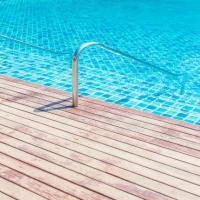
Pool steps and ladders – High-risk points for slips due to smooth finishes and water film.
Walkways and corridors leading to pools – Paths where drips and condensation create slippery patches.
Jacuzzi and spa perimeters – Wet leisure areas with constant surface moisture and high user traffic.
Does Swimming Pool Slip Testing Include Wet and Barefoot Conditions?
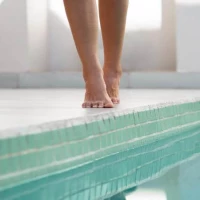
For our slip testing services for swimming pools, we simulate both wet floor use and barefoot pedestrian movement, as required in wet leisure environments.
Many of our tests replicate real-world use by applying water to flooring and using calibrated footwear or barefoot sliders during pendulum testing. This helps accurately reflect the safety of the environment for swimmers, staff, and guests who are most vulnerable when walking without shoes in damp or slippery conditions.
How Quickly Can Swimming Pool Slip Testing Be Scheduled for Sites?
In most cases, our slip testing services for swimming pools can carry out testing within 48–72 hours of booking. For urgent needs, such as prior to reopening after refurbishment or inspection, we also provide priority or emergency testing services.
Our scheduling systems are flexible to accommodate your operating hours, including early mornings, evenings, or off-peak hours.
What Surface Materials Require Regular Swimming Pool Slip Testing?
Our swimming pool slip testing services cover all flooring types exposed to moisture, cleaning agents, and constant use, including:
Textured ceramic and porcelain tiles – Common poolside materials that can lose grip as surface glaze wears down.
Resin-bound or epoxy coatings – Durable finishes that may become smoother with heavy traffic or cleaning chemicals.
Vinyl and PVC flooring – Flexible materials used in changing rooms and walkways that can lose traction when wet.
Rubber and safety matting – Installed for barefoot areas but still susceptible to soap or algae build-up.
Painted or sealed concrete – Hard-wearing surfaces that can develop slick films from water or polish residues.
Stone or composite finishes – Natural and engineered surfaces where uneven texture and cleaning products can alter slip resistance.
Are Ongoing or Annual Swimming Pool Slip Testing Contracts Offered?
Our slip testing services for swimming pools offer both one-off testing services and ongoing slip safety contracts, allowing your team to stay ahead of compliance and reduce risk throughout the year.
Annual or semi-annual re-testing is a popular option for public leisure centres and schools, while private venues often opt for pre-season checks. Regular testing ensures your documentation remains up to date, and any surface performance issues are caught early.
Can Swimming Pool Slip Testing Be Combined With Risk Assessments and Floor Maintenance?
In addition to slip resistance testing of your swimming pools, we offer full floor safety assessments that cover factors like drainage, cleaning procedures, surface wear, and maintenance practices.
We can recommend changes to cleaning schedules or surface treatments to improve safety without requiring major resurfacing. For comprehensive protection, our team can also help with staff training on hazard spotting and floor care best practices.
Contact Slip Testing for a consultation on getting a slip resistance test check-up for your swimming pool.
Get in touch
Skip to
Gallery